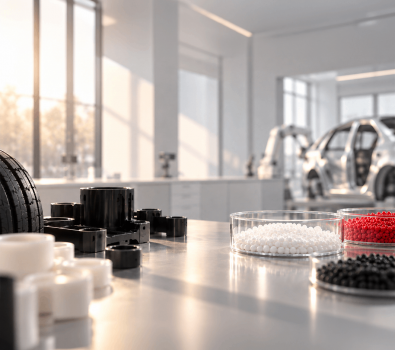
Rubber seals can harden and lose elasticity when exposed to heat. During product development, manufacturers therefore need to assess how well a material withstands heat exposure. One of the test procedures described in ISO 188 is Method D, which uses forced air circulation and a high air exchange rate. The Memmert UFACR-D air change rate chamber, available from MERCI, is designed for these conditions.
Accelerated ageing tests expose specimens to elevated temperatures. Properties such as tensile strength, elongation at break or hardness are measured before and after exposure. The results help compare rubber compounds and assess their suitability for the intended application. Meaningful comparisons require clearly defined test conditions.
The same temperature can produce different results
Air also influences the ageing process. It supplies oxygen to the material surface and removes substances released by the specimens. Changes in airflow or fresh air supply can therefore affect the material properties measured after testing.
It is important to distinguish air velocity around the specimens from the air exchange rate: the rate at which air inside the chamber is replaced with fresh air. A fan can circulate air rapidly within a chamber while the fresh air exchange rate remains low. Both parameters matter when selecting an oven or chamber for rubber ageing tests.
Rubber ageing tests under ISO 188 Method D
For rubber and thermoplastic elastomer tests, ISO 188:2023 Method D requires more than 30 air changes per hour. The mean air velocity at the specimens must be 0.25–3.0 m/s.
Test duration also matters when choosing a procedure. ISO 188 notes that Method D is less suitable for exposures longer than 168 hours, or seven days.
What to check when selecting an ageing test chamber
- Air exchange rate: check the requirement for your chosen test method and how the actual value is documented for the chamber.
- Air velocity: establish the air velocity at the specimens and how the manufacturer verifies it.
- Test duration: assess whether the method is suitable for the planned exposure period, particularly for tests lasting longer than seven days.
- Certificates: distinguish measurements made on the individual unit from documentation covering the chamber design.
Memmert UFACR-D: models and documentation
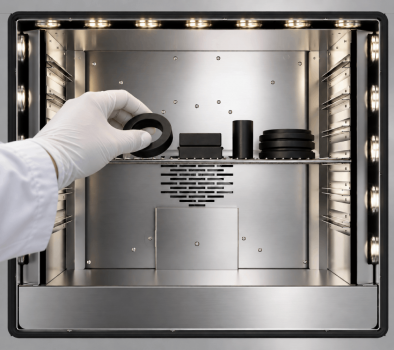
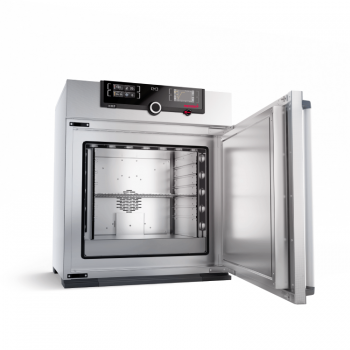
The Memmert UFACR-D is a test chamber developed for ISO 188:2023 Method D and DIN 53508:2024-03 Method D. Its purpose-designed interior directs air around the specimens to create the required airflow and air exchange conditions. A stainless steel grid with a retaining rail helps keep specimens in place.
The UF55ACR-D and UF55ACR-Dplus have an interior volume of 29 litres; the UF110ACR-D and UF110ACR-Dplus offer 69 litres. Single is the standard version, while Plus allows test sequences to be programmed. All four models support temperature setpoints up to +300 °C.
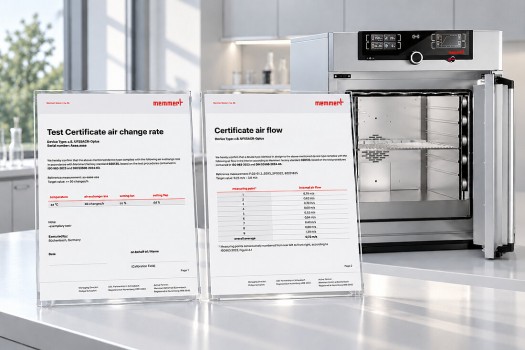
Before delivery, Memmert measures the air exchange rate of each unit and records the result in a unit-specific test certificate. The documentation also includes an airflow certificate based on a chamber type of identical design, plus a calibration certificate. These records support laboratory equipment management and traceability.
The product brochure in the attachments below this article provides a detailed model overview and technical specifications. Contact MERCI for further information about the UFACR-D.
The chamber as part of a complete laboratory
MERCI combines laboratory equipment supply with laboratory design and furnishing. For new or refurbished laboratories, instruments, laboratory furniture, installation and service support can be coordinated through a single supplier.